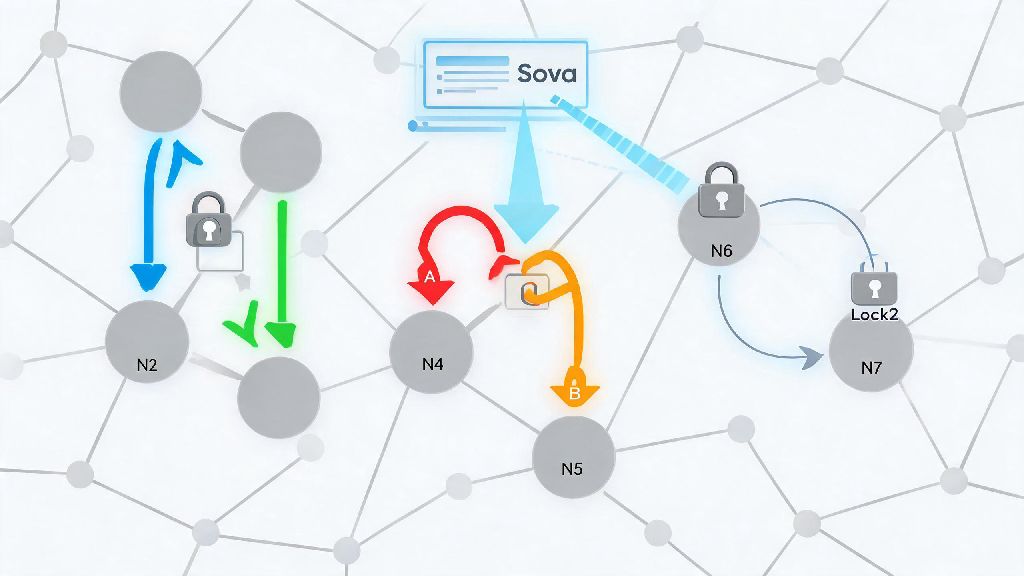
If you’ve spent any time working with concurrency testing or operating system troubleshooting, you’ve probably asked at least once: are sova and deadlock related? For teams building distributed applications or managing high-traffic server environments, understanding the link between these two terms can save you hours of downtime and thousands of dollars in lost revenue. Many people mix up whether Sova is a type of deadlock, a tool that interacts with deadlocks, or something entirely unrelated to concurrency issues. We’re breaking down everything you need to know below, with real use cases and actionable tips for teams of all sizes.
Are Sova and Deadlock Related? Breaking Down the Core Link
To answer the question simply: yes, they are directly connected, but not in the way many people assume. Sova is an open-source concurrency testing tool designed specifically to identify race conditions, deadlocks, and other synchronization errors in multi-threaded and distributed systems. Deadlock, on the other hand, is a common concurrency error where two or more processes are stuck waiting for each other to release a resource, with no way to proceed independently. Sova is built explicitly to detect, diagnose, and help teams resolve deadlock errors before they make it to production environments.
Many new engineers assume Sova is a type of deadlock, but that’s a common misconception. It’s a purpose-built tool that targets deadlocks as one of its primary use cases, along with other concurrency issues that can cripple system performance. It’s not the only deadlock detection tool on the market, but it’s one of the most popular open-source options for teams that don’t want to pay for expensive enterprise testing suites.
How Sova Detects Deadlocks in Real-World Systems
Unlike static analysis tools that only scan code for potential issues without running it, Sova runs dynamic tests that simulate thousands of possible thread and process scheduling sequences to trigger hidden deadlocks that would only show up under rare production conditions. It tracks every resource lock and process wait state across your entire system during testing, flagging any sequence where processes enter a circular wait state with no path to resolution.
For example, if you have an e-commerce platform where payment processing threads and inventory update threads both lock shared resources in inconsistent order, Sova will trigger that exact sequence during testing, even if it only occurs once every 10,000 real user sessions. You don’t have to wait for a customer-facing outage to find the flaw.
Some of Sova’s most useful deadlock detection features include:
That means you don’t have to rebuild your entire testing workflow to add Sova to your tech stack. Most teams report they can set up basic deadlock scanning in less than a day, with zero disruption to existing deployments.
Key Benefits of Using Sova for Deadlock Management
Reduced production outage risk is the biggest benefit for most teams. A recent study of distributed system outages found that 18% of unplanned downtime events are caused by deadlocks, with the average event costing over $250,000 for mid-sized SaaS companies. Catching those deadlocks during testing with Sova eliminates nearly all that risk, with far less effort than manual concurrency testing.
Another big benefit is reduced troubleshooting time. When a deadlock does slip through to production, most teams spend 10+ hours tracing the issue, because deadlocks leave very few obvious logs in standard system monitoring tools. Sova’s pre-production testing gives you full context of exactly what resource ordering conflict caused the deadlock, so you can fix it in minutes instead of hours. It also eliminates the need for manual concurrency testing, which is notoriously time-consuming and prone to human error.
But Sova isn’t a perfect solution for every use case. It works best for testing custom-built concurrent systems, but it won’t detect deadlocks in third-party SaaS tools or closed-source software you don’t have code access to. For those cases, you’ll need to rely on separate deadlock detection tools built for third-party systems. It also has a steeper learning curve for teams that have no prior experience with concurrency testing, though most teams can pick up the basics in a week or less.
Best Practices for Using Sova to Prevent Deadlocks
Run Sova tests on every code change that touches synchronization logic, even if the change seems minor. A single misplaced lock request can introduce a deadlock that goes unnoticed for months, only triggering when a specific combination of user actions happens at the same time. Skipping tests for small changes is one of the most common ways deadlocks slip through to production.
Next, don’t just run the default test settings. Adjust the test runtime and scheduling fuzz intensity based on how critical the system is. For core customer-facing systems like payment processing or user authentication, run longer Sova tests that simulate millions of scheduling sequences to catch even the rarest deadlocks. For internal tools with lower uptime requirements, you can use shorter, less intensive tests to save on computing resources.
You should also combine Sova’s dynamic testing with static code analysis for deadlock prevention, rather than relying on Sova alone. Static tools can catch obvious resource ordering errors before you even run tests, saving you time during the testing phase. One common mistake teams make is only running Sova tests right before a major release. If you wait until the end of the development cycle to test for deadlocks, you’ll likely have to rewrite large chunks of code to fix the issues, which can delay your launch by weeks or even months.
At the end of the day, the answer to are sova and deadlock related is a clear yes, with Sova being one of the most effective open-source tools available for catching and resolving deadlocks before they impact your users. You don’t need a dedicated concurrency testing team to start using it, either. Even small development teams can set up basic Sova deadlock scanning in a few hours, and see immediate improvements in system reliability. If you’ve dealt with unexpected deadlock outages in the past, or you’re building a new concurrent system where downtime can’t be tolerated, adding Sova to your testing workflow is one of the highest ROI changes you can make for your system’s long-term stability.