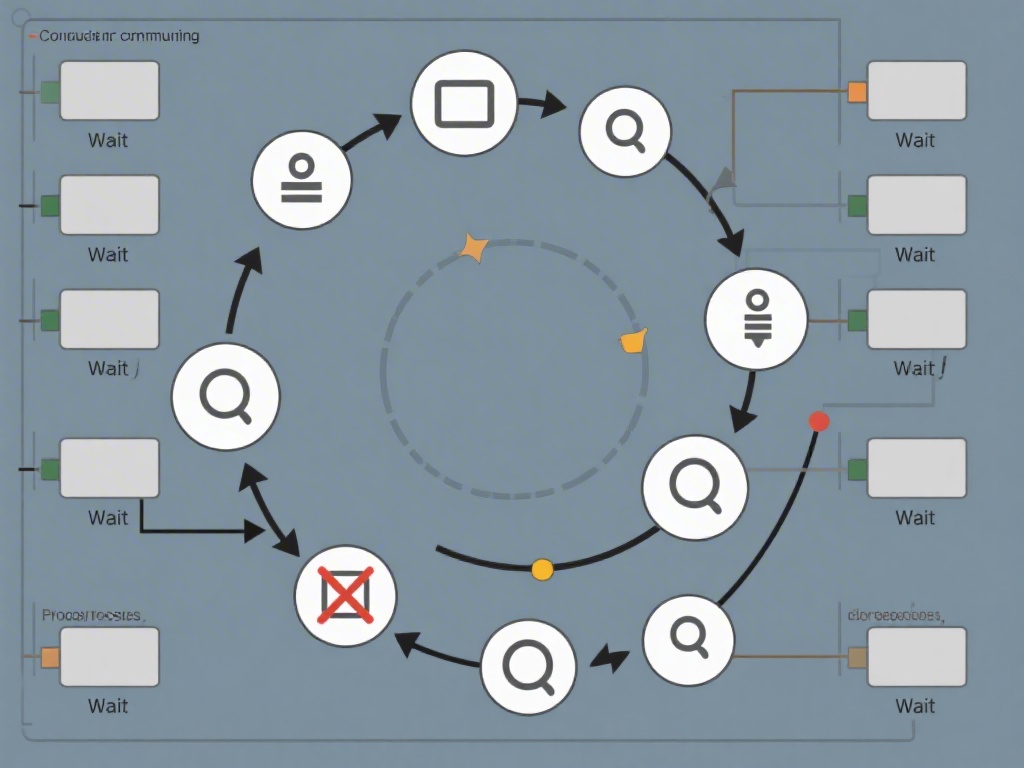
Understanding Deadlock in Concurrent Programming
Deadlock is a common problem in concurrent programming, where two or more processes are unable to proceed because each is waiting for the other to release a resource. It's crucial for developers to understand deadlock and its consequences to ensure the smooth functioning of their applications.
Causes of Deadlock
Deadlock can occur due to several reasons. Here are some of the primary causes:
1. Hold and Wait: A process holds a resource and waits for another resource. Meanwhile, another process holds the required resource and waits for the first one to release it.
2. No Preemption: Resources can't be forcibly taken away from a process. If a process is holding a resource and waiting for another, it can lead to a deadlock.
3. Circular Wait: A circular chain of processes is waiting for resources held by each other, creating a deadlock situation.
4. Mutual Exclusion: Resources can't be shared between processes. If a process holds a resource and doesn't release it until it's finished, it can cause a deadlock.
Deadlock Detection and Recovery
Detecting a deadlock can be challenging, but it's essential to prevent it from causing significant issues. Here are some methods to detect and recover from deadlock:
1. Resource Allocation Graph: This graph helps in visualizing the allocation of resources among processes. Deadlock can be detected by analyzing the graph for cycles.
2. Banker's Algorithm: This algorithm ensures that a system is in a safe state by checking if all resources can be allocated without causing a deadlock.
3. Deadlock Recovery: Once a deadlock is detected, recovery methods can be used to break the deadlock. These methods include process termination, preemption of resources, or rollback of transactions.
Deadlock Prevention Techniques
Preventing deadlock is always better than dealing with it after it occurs. Here are some techniques to prevent deadlock:
1. Resource Allocation: Allocate resources in a way that avoids circular waits. For example, always allocate resources in a specific order.
2. Preemption: Allow resources to be forcibly taken away from a process if necessary. This ensures that a process doesn't hold a resource indefinitely.
3. Avoid Hold and Wait: Always allocate all the required resources to a process before starting it. This way, a process won't hold a resource and wait for another.
4. Deadlock Avoidance: Use algorithms like the Banker's algorithm to ensure that the system is in a safe state and avoid deadlock.
Personal Experience and Insights
In my experience, dealing with deadlock has been a challenging but rewarding experience. It's crucial to understand the underlying causes and prevention techniques to avoid potential issues in concurrent programming. As a developer, I've learned to be more cautious while designing and implementing concurrent systems, ensuring that they are deadlock-free.
In conclusion, deadlock is a significant issue in concurrent programming, but with proper understanding and prevention techniques, it can be avoided. As developers, it's our responsibility to ensure the smooth functioning of our applications by understanding and addressing deadlock-related issues.