If you’ve worked with cloud systems or enterprise databases in 2026, you’ve probably seen a sudden, unexplained outage that traced back to a deadlock. Most teams spend hours troubleshooting the aftermath, but very few stop to understand how do deadlock invites work before they turn into full system halts. These invites aren’t random events — they follow a predictable set of rules, and you can spot them early if you know what to look for. This guide breaks down their mechanics, common triggers, and actionable fixes you can implement today to avoid costly downtime.
Core Conditions That Create Deadlock Invites in 2026 Distributed Environments
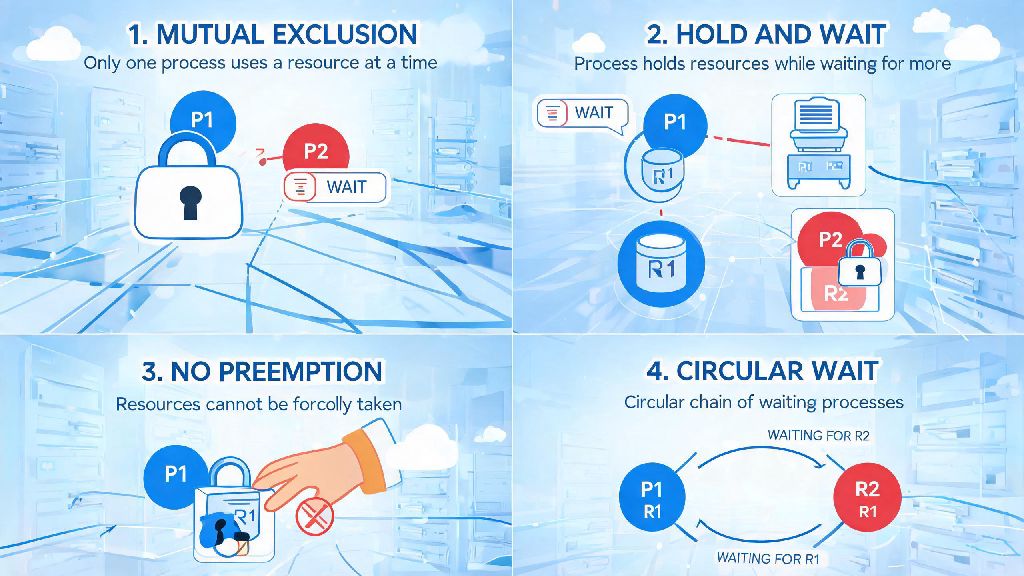
Deadlock invites only form when four specific conditions align, even in the most modern 2026 system architectures. The first is the mutual exclusion condition, where only one process can access a given resource at a time. That’s standard for things like database write locks or file access permissions, but it’s the first building block of a potential deadlock. The second is the hold and wait condition, where a process holds onto one locked resource while waiting for access to another that’s held by a separate process.
The third condition is the no preemption rule, meaning the system can’t force a process to release a resource it’s already locked — the process has to give it up voluntarily. The fourth is circular wait, where each process in a chain is waiting for a resource held by the next process in the line. You won’t get a deadlock invite if even one of these conditions is missing, so most prevention tactics focus on breaking at least one of these rules before they can align.
For example, many 2026 cloud platforms now let you turn off mutual exclusion for read-only resources, which eliminates a huge number of potential deadlock triggers before they ever form. Once you understand how do deadlock invites work, these four conditions make it easy to spot potential issues long before they turn into outages. But that’s not always possible for write-heavy workloads, so you need to know how to spot the other conditions when they start to stack.
How Do Deadlock Invites Work Across Operating Systems and Databases in 2026?
The basic mechanics are the same across both operating systems and databases, but the specific triggers look a little different in 2026 deployments. For operating systems, deadlock invites usually pop up when multiple processes are fighting for access to physical resources like CPU cores, RAM, or storage I/O lanes. That’s especially common with cloud-native microservice architecture, where dozens of small independent services might all be requesting access to the same underlying server resources at the same time.
For databases, deadlock invites almost always tie to transaction locks. If two separate transactions each lock a table row that the other needs to complete, you’ve got a deadlock invite that will turn into a full deadlock as soon as both transactions hit their wait timeout. In 2026 distributed database clusters, this gets even more complicated, because locks might be held on nodes in different regions, so the system doesn’t even detect the invite until it’s already turned into an outage. We recommend checking this 2026 distributed deadlock detection playbook for more details on cross-region deadlock tracking if you run multi-region clusters.
So the core flow is the same no matter where you see it: conditions align, processes get stuck waiting on each other, and if no intervention happens, the system grinds to a halt for all processes involved. If you’re new to managing distributed systems, learning how do deadlock invites work across different environments is one of the highest ROI skills you can build in 2026. The biggest mistake teams make right now is assuming their built-in system deadlock detectors will catch these invites early, but most default tools only scan for deadlocks every few minutes, which is way too slow for real-time workloads.
Common 2026 Use Cases Where Deadlock Invites Fly Under the Radar
Most teams only look for deadlock invites in obvious places, but there are a handful of common 2026 deployment scenarios where they almost never check. The first is AI model training workloads, where multiple training jobs might be fighting for access to the same GPU memory pools. I worked with a generative AI startup earlier in 2026 that lost 8 hours of training time on a $20k GPU cluster because two training jobs locked separate memory segments and waited for each other for hours before anyone noticed.
Another underrated spot is IoT device management platforms, where thousands of edge devices might be sending data to the same central server at scheduled intervals. If all of those devices request a write lock on the same database table at the top of the hour, you’ll get a flood of deadlock invites that can take down your entire data ingestion pipeline. Most teams don’t even recognize these scenarios as high-risk for deadlock invites, because they never took the time to learn how do deadlock invites work in non-standard deployments until they’re dealing with an outage.
Third, e-commerce flash sale environments are a hotbed for hidden deadlock invites in 2026. When thousands of users try to check out at the same time, hundreds of transactions are all trying to lock inventory and user payment rows at the same time. Even if you have load balancers in place, the sudden spike in lock requests can create hundreds of deadlock invites in the span of a few seconds, leading to failed checkouts and lost revenue.
Actionable Steps to Block Deadlock Invites Before They Cause Outages
You don’t need to completely rebuild your system architecture to avoid deadlock invites in 2026. Small, targeted changes can cut your risk by 90% or more, if you focus on the right areas. You don’t need a computer science degree to understand how do deadlock invites work, either — the core logic is simple once you see it in action. We’ve put together a simple 4-step framework we use with all our clients to eliminate preventable deadlock events:
These steps don’t take more than a few hours to set up for most teams, and they can save you tens of thousands of dollars in lost uptime and engineering hours. You don’t need fancy enterprise tools to implement them either — most 2026 cloud monitoring platforms have built-in features to support all of these workflows out of the box, if you know where to look.
One thing to keep in mind: you don’t have to eliminate 100% of deadlock invites to keep your system stable. Some invites are unavoidable, especially for high-traffic write-heavy workloads, but as long as you detect them early, you can resolve them in seconds with no user impact.
Deadlock-related outages are one of the most frustrating, avoidable issues plaguing 2026 tech teams, but they don’t have to be a regular part of your workflow. Taking the time to understand how do deadlock invites work and implement small proactive checks will cut your downtime significantly, and free up your engineering team to work on high-impact projects instead of putting out fires. Start with the smallest, easiest step first — updating your resource audit interval — and build from there, and you’ll see a noticeable drop in deadlock events within the first month.