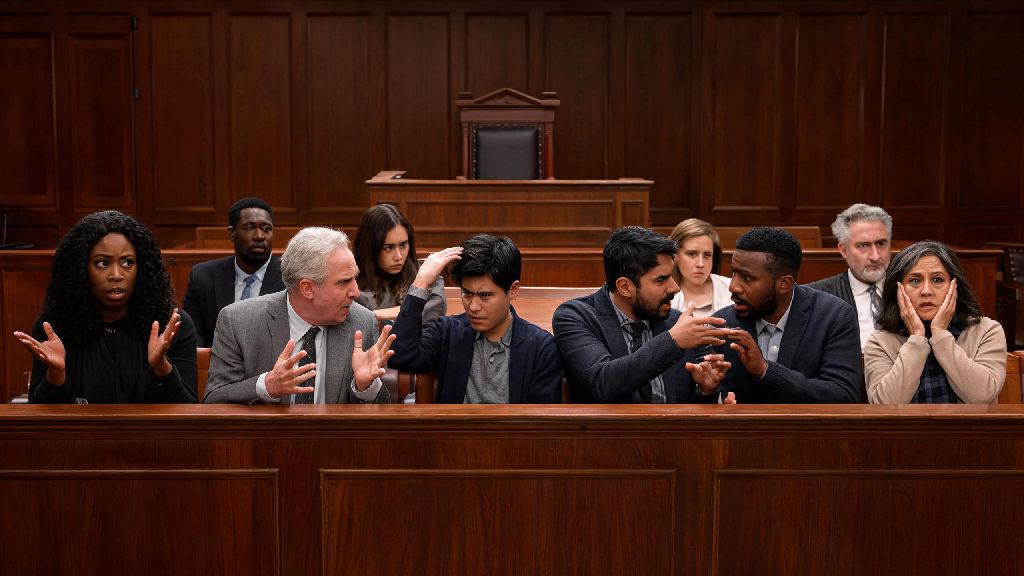
If you’ve ever watched a legal drama or followed a high-profile court case, you’ve probably heard the phrase “hung jury” thrown around when a trial hits a snag. But what does it mean when the jury is deadlocked, and how does that change the trajectory of a case that’s already taken weeks or months to litigate? Most people have a vague idea that it means jurors can’t agree, but the actual legal implications are far more nuanced than what you see on TV. Whether you’re facing jury duty, studying for a pre-law exam, or just curious about how the US court system works, understanding this process clears up a lot of common myths about trial rulings.
What Does It Mean When the Jury Is Deadlocked? Core Legal Definition
First, let’s break down the core rules that apply to most criminal and civil trials in the US. For a jury to deliver a valid verdict, all members must reach a unanimous agreement in most criminal cases, and a majority or supermajority in some civil cases, depending on the state. A deadlock happens when jurors have deliberated for an extended period, have gone through all presented evidence multiple times, and still cannot reach the required level of agreement to issue a verdict. You might also hear this scenario called a “hung jury,” and it’s far more common than you might think.
Data from the National Center for State Courts shows that roughly 6% of all criminal trials end in a deadlock, with higher rates for high-stakes felonies like murder or sexual assault. Many people assume a deadlock means the jury is split evenly down the middle, but that’s not always the case. For example, a 10-2 split in a criminal trial that requires unanimity is still a deadlock, even if only two jurors hold out against the rest. Judges will usually give jurors what’s called an Allen charge first before officially declaring a deadlock, which is a reminder to carefully consider each other’s perspectives and keep working to reach an agreement. If you’ve ever asked what does it mean when the jury is deadlocked before a mistrial is called, this initial deliberation push is the first step of the formal process.
What Happens Immediately After a Jury Deadlocks?
Once the jury foreperson informs the judge that deliberations have stalled with no path forward, the judge has a few clear options to move forward, depending on how long the jury has already deliberated and the complexity of the case. Many people assume a deadlock automatically leads to a mistrial, but that’s usually the last resort, not the first step. If you’ve ever wondered what does it mean when the jury is deadlocked for the day-to-day running of a court, this step-by-step process is designed to minimize unnecessary waste of time for everyone involved.
It’s important to note that judges can’t force jurors to change their votes, and any attempt to pressure holdout jurors to agree with the majority would be grounds for an appeal later on. In cases where the jury has already deliberated for multiple days, judges will usually skip additional deliberation steps and move straight to a mistrial to avoid wasting court resources and putting jurors through unnecessary stress.
Common Misconceptions About Jury Deadlocks
There are a lot of widespread myths about deadlocked juries, most of them spread by fictional legal shows that cut corners for drama. Clearing these up helps you understand the actual impact of a deadlock on all parties involved. First, many people believe a deadlock is equivalent to a “not guilty” verdict for the defendant, but that’s completely false. A mistrial from a deadlock means the prosecution can choose to retry the case as many times as they want, as long as a judge agrees there is enough evidence to move forward. There is no double jeopardy protection in this scenario, because the original trial never reached a final verdict.
Another common myth is that holdout jurors are always stubborn or uninformed. In many high-profile deadlock cases, holdout jurors have identified gaps in evidence that the majority missed, leading to revised prosecutions or even dropped charges later on. Jurors are not required to explain their votes to anyone, including the judge or lawyers, once deliberations end, so it’s impossible to say for sure why a jury deadlocks in most cases. Most people who ask what does it mean when the jury is deadlocked also assume that the entire trial was for nothing, but that’s rarely the case.
Some people also assume deadlocks are always a waste of time and money, but that’s not always true for either party. For the defense, a deadlock can signal that the prosecution’s case is weak enough that at least one juror isn’t convinced of guilt beyond a reasonable doubt, which can encourage the prosecution to offer a more favorable plea deal instead of retrying the case. For the prosecution, a near-unanimous split can signal that they have a strong case, and only need to adjust their presentation slightly to win a conviction on retrial.
What a Deadlock Means for Parties Involved in a Trial
If you are involved in a trial, either as a defendant, a victim, or a witness, a deadlock can feel like a huge letdown after months of preparation, but it’s important to know what options you have moving forward. For criminal defendants, the first thing you should do after a mistrial from a deadlock is talk to your attorney about whether the prosecution is likely to retry the case. If the jury split was heavily in your favor, your attorney might be able to negotiate a plea deal with reduced charges, or even file a motion to dismiss the case entirely if the prosecution’s evidence is too weak to justify another trial. If you’ve ever served on a jury and been part of a split, you already know firsthand what does it mean when the jury is deadlocked, and how emotionally draining the deliberation process can be for everyone connected to the case.
For victims and prosecution teams, a deadlock means you will have to decide if you want to go through the entire trial process again, which can take another year or longer in many court systems. You don’t have to agree to a retrial if the emotional or financial cost is too high, and many prosecution offices will choose not to retry cases where the jury split was heavily in favor of acquittal. It’s also worth noting that testifying in multiple trials can be traumatic for victims, so many prosecutors will prioritize victim preferences when deciding whether to move forward with a retrial.
For jurors who were part of a deadlocked jury, it’s normal to feel frustrated like you wasted your time, but you have no legal obligation to participate in any retrial, and you are allowed to talk about your experience after the trial ends, as long as you don’t share private information about other jurors. It’s also important to remember that there is no “right” verdict, and holding out for a position you believe is supported by evidence is not a failure, it’s exactly what jury duty requires you to do.
The US court system is designed to prioritize fair deliberation over fast verdicts, so deadlocks are an expected, if inconvenient, part of the process. Knowing what does it mean when the jury is deadlocked takes a lot of the stress and confusion out of following trials, whether you’re directly involved or just watching from the sidelines. Contrary to popular belief, a hung jury isn’t a failure of the system—it’s often a sign that jurors are taking their responsibility seriously, weighing evidence carefully, and refusing to rush a decision that will change someone’s life forever.