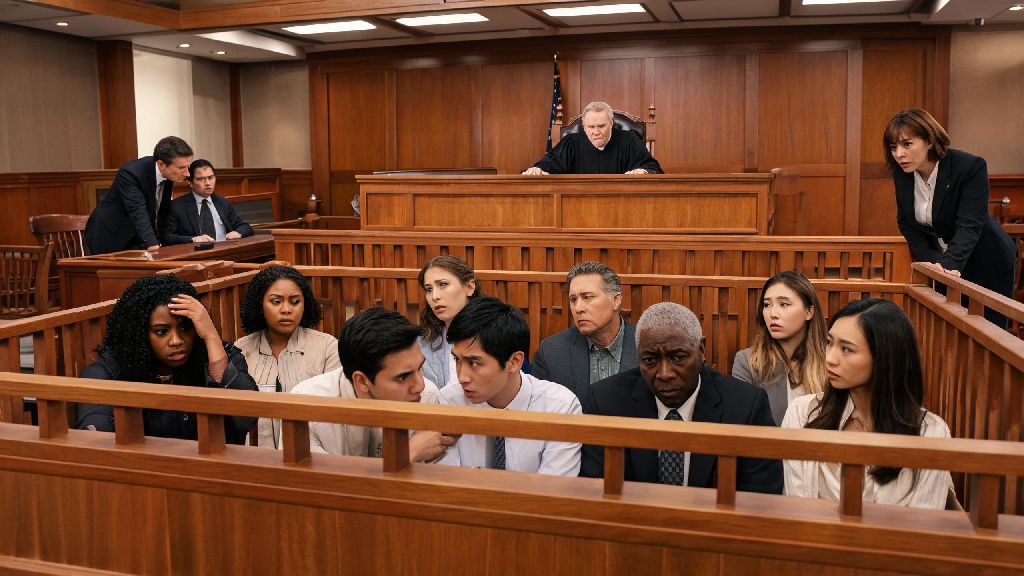
If you’ve ever binged a legal drama or followed a high-profile public trial, you’ve probably seen the tense moment where a jury returns to the courtroom without a clear verdict. Judges look frustrated, attorneys lean in to whisper to their clients, and everyone in the room seems to hold their breath. If you’ve ever wondered what does it mean if a jury is deadlocked, you’re not alone—this common court scenario has major implications for everyone involved in a trial, from the defendant to the prosecution. It’s not just a TV plot device either; recent data from U.S. state judiciaries shows roughly 6% of all criminal trials end in a deadlocked jury, with that number jumping to 10% for violent felony cases. This guide breaks down everything you need to know about the process, causes, and outcomes of a deadlocked jury, no legal degree required.
What Does It Mean If a Jury Is Deadlocked? Core Definitions First
At its most basic, a deadlocked jury (also commonly called a hung jury) is a jury that cannot reach the required verdict threshold after extended deliberation. The required threshold varies by jurisdiction and case type: almost all U.S. criminal trials require a unanimous verdict to convict or acquit, while most civil trials only require a 9-3 or 10-2 majority to rule in favor of the plaintiff or defendant. Judges won’t declare a deadlock the second a jury says they can’t agree, either.
In most cases, when a jury first reports they are split, the judge will issue what’s called an Allen charge, sometimes referred to as a “dynamite charge.” This instruction reminds jurors of their duty to deliberate in good faith, listen to their peers’ arguments, and try to reach a consensus if at all possible. They’ll send the jury back to deliberate for several more hours, or even another full day, before asking for a second update on their progress.
A jury is only formally declared deadlocked if no progress is made after multiple rounds of deliberation and judicial prompting. There’s no set time limit for deliberations either; some juries deliberate for less than a day before deadlocking, while others spend two weeks or more talking through evidence before they admit they can’t reach an agreement. The judge will only declare a deadlock if the jury’s foreperson confirms repeatedly that there is no reasonable path to a verdict, no matter how much more time they spend together.
Top Causes of a Deadlocked Jury
Deadlocks don’t happen out of nowhere, and almost all trace back to a small handful of common issues that come up during trials. Many people assume deadlocks only happen in high-profile, emotionally charged cases, but they can happen in even small, low-stakes misdemeanor trials if the right factors line up. Some of the most common causes include:
For example, I worked on a misdemeanor theft case a few years back where the entire case came down to the testimony of a store security guard who said he saw the defendant steal a jacket. Half the jury thought the guard was lying to keep his job, and the other half thought he was telling the truth, so they deadlocked after 12 hours of deliberation. There was no security footage or other evidence to support either side, so there was no way to bring the jury to a consensus.
Holdout jurors are the most common cause of deadlocks in criminal trials, according to recent court data from state judiciaries across the U.S. In roughly 70% of deadlocked criminal cases, the jury was split 11-1 or 10-2, with one or two jurors refusing to budge from their position even after the rest of the group agreed on a verdict. It’s important to note that holdout jurors aren’t doing anything wrong; the legal system is designed to require consensus specifically to avoid wrongful convictions, so a single juror who believes the prosecution hasn’t proven its case beyond a reasonable doubt is well within their rights to hold their ground.
What Happens Immediately After a Jury Is Declared Deadlocked
Once a judge formally declares a jury deadlocked, they will immediately issue a mistrial. That means the current trial is over, no verdict is entered, and the case reverts to its pre-trial status. Many people assume a deadlocked jury means the case is thrown out for good, but that’s almost never true. Double jeopardy protections don’t apply to mistrials from deadlocked juries, because the case never reached a final verdict, so the prosecution or plaintiff can choose to move forward with the case again if they want to.
For criminal cases, the prosecution has three main options after a deadlock: they can refile the charges and schedule a new trial, offer the defendant a more favorable plea deal to avoid a second trial, or drop the charges entirely if they don’t think they can win a second time. The choice usually depends on how the jury was split: if the jury was 11-1 for conviction, most prosecutors will move forward with a retrial, but if the split was 10-2 for acquittal, they’ll often drop the charges or offer a very lenient plea deal.
A mistrial from a deadlocked jury does not count as an acquittal, so defendants can be retried for the same charges in most cases. For civil cases, the process is almost identical: the plaintiff can choose to refile the suit, offer the defendant a settlement, or drop the case entirely. Retrials for civil cases are far less common than criminal retrials, though, because civil trials are expensive and most plaintiffs would rather settle than pay to go through the entire process again.
I’ve seen cases where prosecutors drop charges right after a deadlock because they found out a key witness is no longer willing to testify, or because the jury told the judge they didn’t think the prosecution’s evidence was strong enough to support a conviction. It’s always up to the prosecution’s discretion, though, so there’s no way to predict exactly what will happen after a deadlock without talking to the legal teams involved.
Key Things to Know If You’re Involved in a Case With a Deadlocked Jury
If you’re a defendant, plaintiff, or even a juror in a case that ends in a deadlock, there are a few important rules you should follow to protect yourself and avoid causing problems for any future trials. These rules apply to both criminal and civil cases, no matter what state you’re in.
For defendants, the first thing you should do after a deadlock is talk to your attorney before you make any decisions or say anything to anyone. It’s normal to feel relieved that you didn’t get convicted, but you’re not out of the woods yet, and anything you say after the mistrial can be used against you if there’s a second trial. If you are a defendant, you should never agree to a plea deal immediately after a deadlock without letting your lawyer review all case details first. Prosecutors often offer low plea deals right after a deadlock hoping you’ll take it out of relief, even if they don’t have enough evidence to win a retrial.
For plaintiffs or prosecutors, take time to get feedback from the jury if you can, before you make a call about a retrial. Most jurors are willing to talk about what made them split, and that information can help you decide if a retrial is worth your time. If most jurors thought your case was weak, you’re better off dropping the charges or offering a settlement than wasting time and money on a second trial you’ll probably lose.
If you’re a juror who was part of a deadlocked jury, you have no obligation to talk to anyone about your deliberations, including attorneys, the media, or even friends and family if you don’t want to. Jurors are not required to speak to attorneys or the media after a deadlocked mistrial, even if asked repeatedly. You can choose to share your perspective if you want, but no one can force you to, and you won’t get in trouble for declining to comment. It’s also important not to share any details about deliberations publicly if there’s a chance of a retrial, because that could taint the jury pool for the next case.
One extra thing to keep in mind for all parties: deadlocks are not a sign that the legal system failed. They’re just a sign that the jury couldn’t reach the required consensus, which is often a feature of the system, not a bug. It’s far better to have a deadlock than a wrongful conviction or a unfair civil ruling that gets overturned on appeal later.
Understanding what does it mean if a jury is deadlocked takes a lot of the confusion out of unexpected trial outcomes, whether you’re directly involved in a case or just following a public trial in the news. Every case is different, but the core rules and processes are the same across almost all U.S. jurisdictions, so you don’t need a legal degree to follow what’s happening. If you ever end up directly involved in a case that ends in a deadlock, the best thing you can do is listen to your attorney, avoid making impulsive decisions, and remember that a mistrial is not the end of the road, but it’s also not a final ruling either. For more personalized advice tailored to your specific case, always reach out to a licensed attorney in your area.