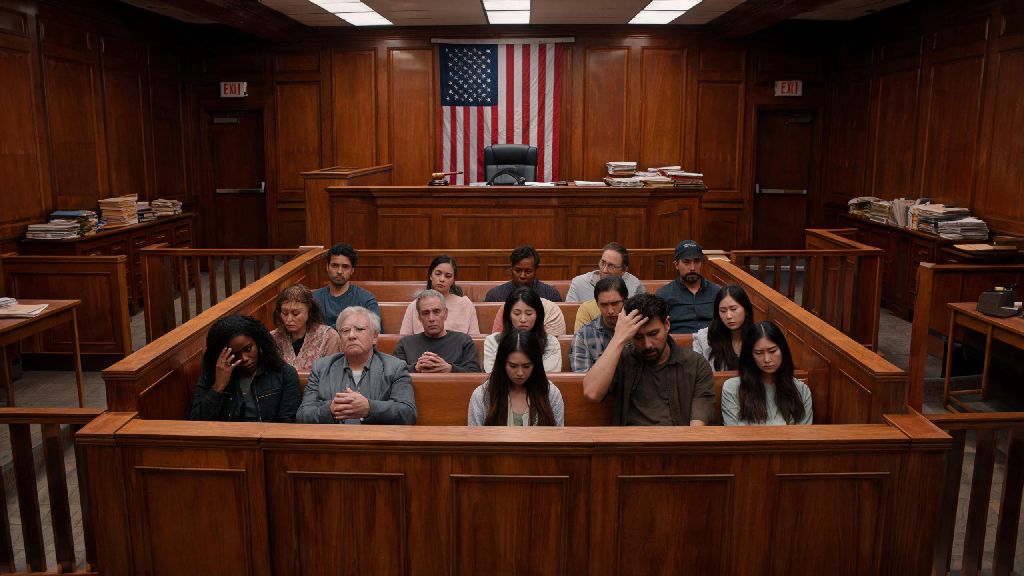
If you’ve ever binged a legal drama, you’ve probably seen the tense, quiet scene where the jury files back into the courtroom, and the judge announces they can’t reach a unanimous verdict. Most people only see this moment as a dramatic plot twist, but few understand what happens when the jury is deadlocked in real, unscripted court cases. It’s far more common than you might think, and the process plays out very differently than what you see on TV. This guide breaks down the step-by-step procedures, common outcomes, and misconceptions you should know if you ever encounter a hung jury as a party to a case, a witness, or even a juror.
Immediate Court Steps That Unfold When the Jury is Deadlocked
The process starts when the jury foreperson sends a note to the judge stating that the group is irreconcilably split and no amount of extra discussion will lead to a unanimous verdict. Judges don’t immediately declare a mistrial at this point, though. First, they will almost always ask if short, focused additional deliberation could help bridge the gap between opposing groups of jurors. If the foreperson says there’s a small chance of progress, the judge will send them back to continue talking for a set period, usually a few hours or half a day.
In most federal courts and many state courts, the judge will also issue what’s called an Allen charge at this stage. Sometimes called a “dynamite charge,” this is a formal instruction that reminds jurors of their duty to deliberate in good faith, listen to each other’s perspectives, and avoid holding onto opinions just for the sake of disagreement. It explicitly tells jurors they don’t have to abandon sincerely held beliefs about the evidence, but it encourages them to reconsider their positions if most of the group disagrees with them. Some states, including California, have banned Allen charges entirely because courts found they put unfair pressure on holdout jurors to change their votes just to end deliberations.
If the jury comes back after the extra deliberation period and still says they can’t agree, the judge will officially declare a mistrial. At that point, the trial ends immediately, and no verdict is entered on the record. If you’ve ever wondered what happens when the jury is deadlocked in the first few hours of deliberation, know that judges almost always push for more discussion first, even if the foreperson says the group is completely stuck.
Core Outcomes of a Confirmed Hung Jury
Once a mistrial is declared, there is no winner or loser in the case. The defendant is not found guilty or innocent, and the prosecution has no formal ruling to enforce. From that point, the next steps fall almost entirely to the prosecution’s office, which has full prosecutorial discretion to decide how to move forward. They have three main options: refile the case for a new trial, offer a plea bargain to the defendant, or drop the charges entirely.
Many people assume double jeopardy rules prevent a retrial after a deadlock, but that’s not true. Double jeopardy only applies when a valid, final verdict has been entered by a jury, so a retrial with an entirely new jury is fully allowed. Most people don't realize that part of what happens when the jury is deadlocked is that both sides get informal access to feedback about what points the jurors were split on, if the judge allows it. This information is incredibly valuable for shaping strategy if the case goes to a second trial, or for negotiating a plea deal that works for both sides.
Plea bargains are extremely common after a hung jury, because both sides now have a clear sense of the weaknesses in their case. For example, if the jury split 10-2 in favor of acquittal, the prosecution might offer a much lighter sentence than they would have before the first trial, to avoid the risk of losing entirely at a second trial. If the split is 11-1 in favor of conviction, the defense might be more willing to accept a plea deal instead of rolling the dice on a second jury that might agree on a guilty verdict.
Factors That Increase the Risk of a Jury Deadlock
Data from the Bureau of Justice Statistics shows that hung juries occur in roughly 6% of all criminal trials in the U.S, but that rate jumps to 15% for high-profile violent felony cases. A number of consistent factors make a deadlock far more likely, including:
I’ve spoken to dozens of former jurors who sat on deadlocked juries, and almost all of them cited unclear legal instructions as the biggest reason they couldn’t agree. Most states use standard, jargon-heavy jury instructions that haven’t been updated in decades, so it’s not uncommon for half the jury to misinterpret what “beyond a reasonable doubt” actually means in practice. States that use non-unanimous jury rules for criminal cases have far lower deadlock rates, for obvious reasons, but most states still require full unanimity for felony convictions.
A common question we get from clients is what happens when the jury is deadlocked 11-1 for conviction, and the short answer is that it’s still a mistrial, no matter how lopsided the split is. Even if only one juror holds out for acquittal, there’s no valid verdict, and the prosecution has to decide whether to pursue the case again.
Key Misconceptions About Jury Deadlocks You Should Ignore
There are a lot of persistent myths about hung juries that lead to unnecessary confusion for people involved in trials. One of the most common is that a deadlock means the defendant is effectively innocent. That’s not true at all: a deadlock is just a failure to reach a verdict, not a formal finding of innocence. The prosecution can still refile the case if they believe they can win a second time, and the defendant’s record will show a mistrial, not an acquittal, unless the charges are formally dropped.
Another myth is that holdout jurors are always being stubborn or unreasonable. In many cases, the single juror holding out is the only person who noticed a key flaw in the prosecution’s case that everyone else missed during deliberations. The jury system is designed to require near-universal agreement for a conviction specifically to avoid rushing to judgment, so a holdout juror is often doing exactly what they’re supposed to do by voting their conscience.
Many people also assume all deadlocked juries lead to retrials, but that’s far from the case. Roughly 40% of hung jury cases are never retried, because prosecutors decide the case isn’t strong enough to justify the cost and time of a second trial. For low-level misdemeanors, most prosecution offices will drop the charges entirely after a deadlock, rather than wasting court resources on a case that’s already split one jury. For more serious felonies, prosecutors usually only retry the case if the jury split was heavily in favor of conviction, or if new evidence emerges that strengthens their case.
One final myth worth addressing is that jurors face penalties for being part of a deadlocked jury. There are no consequences for jurors who vote their honest opinion, even if they’re the only person holding out. Jurors are protected from retaliation for their votes, and judges will almost always seal the vote count of a deadlocked jury to protect jurors from harassment by either party or the public.
So if you’re ever involved in a trial, either as a party or a juror, knowing the process around a hung jury can help you manage your expectations if deliberations drag on longer than expected. It’s important to remember that what happens when the jury is deadlocked varies a bit by state, but the core steps of further deliberation, potential jury instructions, and final mistrial declaration are consistent across most U.S. courts. If you’re a defendant facing a potential retrial after a deadlock, work closely with your attorney to review any available feedback from the first jury to build a stronger case, or to negotiate a plea deal that fits your goals. A deadlock isn’t a win or a loss for either side, just a sign that the jury system worked as intended, requiring broad agreement to hand down a criminal conviction.