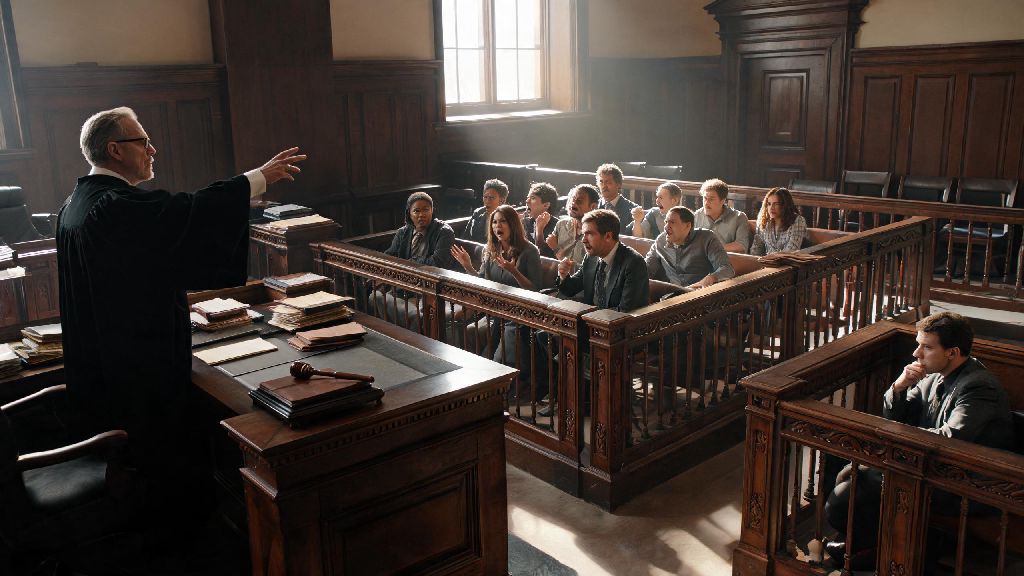
If you’ve ever binged a legal drama, you’ve probably seen the tense scene where a jury files back into the courtroom, and the foreperson admits they can’t reach an agreement. That’s exactly what happens in a deadlock jury, but real-life court processes for these situations are far more structured than what you see on screen. Most people never encounter a deadlock jury in person, so it’s easy to have gaps in understanding about what comes next for everyone involved in the case.
What Happens in a Deadlock Jury Immediately After the Announcement?
As soon as the jury foreperson tells the judge they can’t reach a required verdict, the first step is almost always a set of supplemental instructions from the bench. Most jurisdictions require a unanimous verdict for criminal felony cases, so even one dissenting juror can trigger this process. The judge will first ask if further deliberation has any chance of leading to an agreement, and if the answer is yes, they’ll issue what’s called an Allen charge.
An Allen charge is a carefully worded instruction that encourages jurors to re-examine their positions, listen to the arguments of other jurors, and make a good faith effort to reach a verdict. But it’s important to note that judges don’t force jurors to change their opinions to avoid a deadlock. Jurors are still allowed to stand by their honest belief about the evidence, even if it puts them at odds with the rest of the group.
In most cases, the jury will be sent back to deliberate for another two to four hours after the Allen charge. If they return a second time with no agreement, the judge will move to the next phase of the process.
Key Factors That Lead to a Hung Jury Deadlock
Deadlocks don’t happen out of nowhere, and they’re almost never caused by lazy or uncooperative jurors. In my time volunteering as a court observer for local criminal trials, I’ve seen that deadlocks almost always stem from tangible issues with the case or juror instructions, not individual stubbornness. Some of the most common causes include:
It’s a common myth that deadlocks happen all the time, but only 2-3% of all jury trials end in a deadlock, according to recent state court data. Most juries are able to work through their disagreements and reach a verdict after a few hours or days of deliberation.
Mistrial Outcomes and Next Steps for Both Parties
If the jury returns a second time with no agreement, the judge will officially declare a mistrial. A mistrial means no verdict has been entered, and the case is essentially reset to the pre-trial phase for the prosecution and defense, or the plaintiff and defendant in civil cases.
Prosecutors in criminal cases can choose to refile charges, negotiate a new plea deal, or drop the case entirely after a deadlock. Double jeopardy rules don’t apply in these cases, because there was no final verdict of guilty or not guilty to bar a retrial. That said, many prosecutors will only refile if they have strong evidence they think will convince a new jury, since retrials are costly and time-consuming for both the state and witnesses.
In civil cases, the plaintiff has the same options: they can refile their claim, negotiate a settlement with the defendant, or drop the case entirely. Most jurisdictions limit the number of times a case can be retried after a deadlock, usually to two or three total, to avoid wasting court resources and putting parties through repeated legal stress.
For jurors, a deadlock means their service is complete, and they’re free to leave after being dismissed by the judge. They’re allowed to talk about the deliberation process if they want, but they’re not required to share any details with the parties or the public.
Common Misconceptions About Deadlock Juries
Because deadlocks are so rare, there are a lot of widespread myths about how they work and what they mean for the people involved in a case. One of the most common myths is that a deadlock always means there’s one single holdout juror refusing to go along with the rest of the group. In reality, deadlocks can be split any way, from 11-1 to 6-6, depending on the case and the jury.
Another big myth is that a deadlock counts as a win for the defense. That’s not true, because a mistrial leaves the door open for the prosecution to refile charges and try the case again. It’s not a not guilty verdict, and it doesn’t clear the defendant’s name in any official capacity.
Many people also assume deadlocked jurors are failing at their job, but that’s the opposite of the truth in most cases. Many deadlocks happen because jurors take their responsibility seriously and refuse to rush a verdict they don’t believe in, even if it means going through extra hours of deliberation or facing frustration from other jurors. The right to a jury trial includes the right for jurors to stand by their honest assessment of the evidence, even if it leads to a deadlock.
Whether you’re a potential juror, a party to a court case, or just someone who likes learning about legal processes, understanding what happens in a deadlock jury helps you make sense of these rare and often high-stakes situations. Deadlocks are frustrating for everyone involved, from the parties waiting for a verdict to the jurors who spent days weighing evidence, but they’re also an important part of the jury system that protects people from rushed or unjust verdicts. If you ever get called for jury duty, knowing these rules can help you feel more prepared if you end up in a deliberation room where agreement feels out of reach.