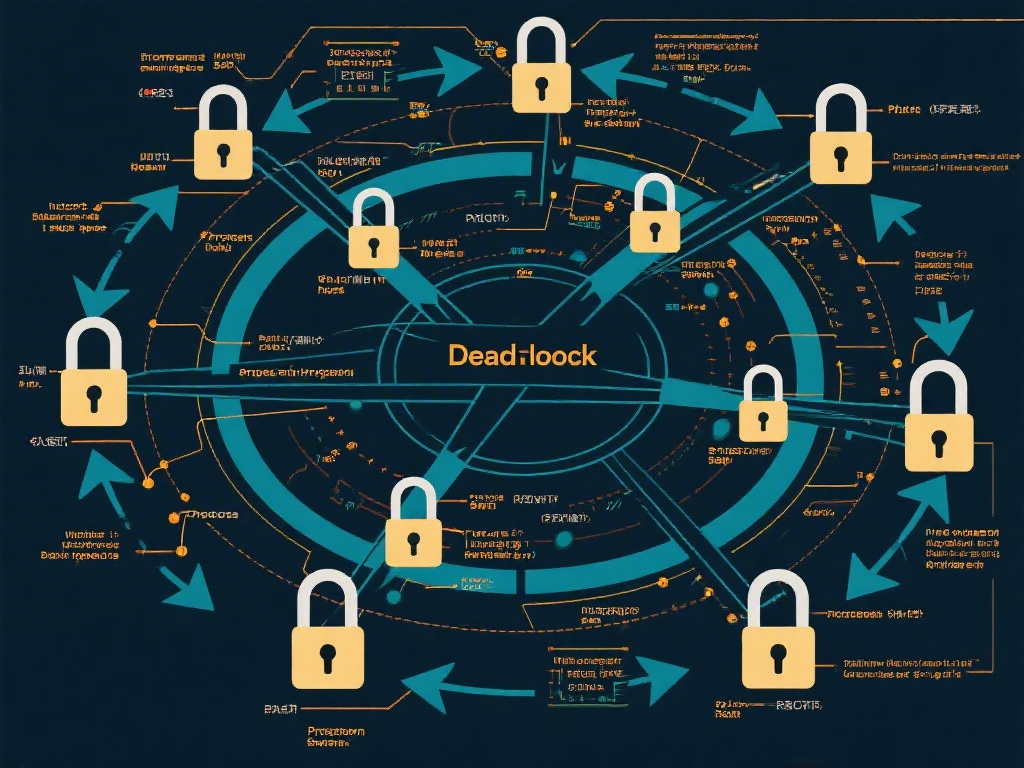
Understanding deadlocks is crucial for anyone working with complex systems. A deadlock occurs when two or more processes are unable to proceed because each is waiting for the other to release a resource. This guide will help you navigate the complexities of deadlocks, offering insights into prevention, detection, and recovery.
Deadlock Basics
At its core, a deadlock is a situation where two or more processes are unable to proceed because each is waiting for a resource that is being held by another process. This creates a cycle of dependency that can lead to a standstill. To understand deadlocks, it's essential to recognize the four necessary conditions: mutual exclusion, hold and wait, no preemption, and circular wait.
Deadlock in Operating Systems
In operating systems, deadlocks can occur when processes compete for resources. The key to preventing deadlocks in OS environments is to manage resources efficiently. Techniques such as resource allocation graphs, deadlock detection algorithms (like Banker's algorithm), and resource preemption can help mitigate the risk of deadlocks.
Deadlock Detection and Recovery
Even with preventive measures, deadlocks can still occur. Detection and recovery are essential components of managing deadlocks. Detection algorithms, such as the resource allocation graph or the wait-for graph, can identify deadlocks. Recovery strategies, like process termination or resource preemption, can then be employed to break the deadlock cycle.
Deadlock Prevention Techniques
Preventing deadlocks involves avoiding the four necessary conditions. This can be achieved through various techniques, such as resource ordering, where resources are assigned a unique identifier, and processes request resources in a predetermined order. Another approach is to use timeouts, where a process waits for a resource for a limited time before releasing its current resources and retrying.
Deadlock in Databases
In databases, deadlocks can occur when multiple transactions are trying to access the same data simultaneously. To prevent deadlocks in database systems, techniques like locking and concurrency control are employed. Locking ensures that only one transaction can access a particular piece of data at a time, while concurrency control mechanisms help manage the interactions between transactions.
Deadlock Case Studies
Real-world case studies can provide valuable insights into how deadlocks can manifest and how they can be addressed. For example, a study of a banking system might reveal how deadlocks can occur during high transaction volumes and how they were resolved through careful resource management and deadlock detection algorithms.
In conclusion, understanding and managing deadlocks is a critical aspect of system design and maintenance. By implementing effective prevention techniques, employing detection and recovery strategies, and staying informed about real-world examples, you can minimize the risk of deadlocks and ensure the smooth operation of your systems.